

When you walk into the grand Casino du Liban in Jounieh, you are immediately transported back to a lost era. The walls of the entrance hall and main galleries are lined with large black-and-white photographs from the 1960s and early 1970s. There is President Camille Chamoun greeting foreign dignitaries; Charles Helou smiling beside international statesmen; Fairuz performing at the height of her fame; Hollywood stars and European royalty mingling with Lebanese elites at lavish parties; images of a confident, glamorous Beirut filled with elegance, possibility, and unapologetic modernity. As you stand there, it is almost impossible not to pause and ask: What happened to Lebanon?
In the early 1960s, Israel’s Ministry of Tourism dispatched a high-level delegation to New York. Their mission was to sit down with one of America’s most prestigious advertising agencies and figure out how to transform Tel Aviv into another Beirut on the Mediterranean.
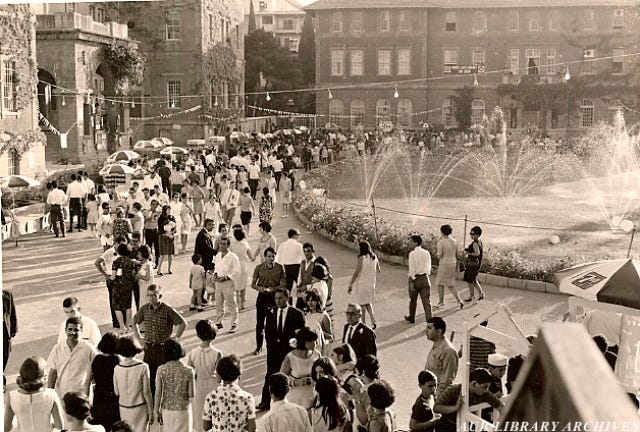
At that moment, Beirut stood as the undisputed crown jewel of the Middle East, a city routinely called “the Paris of the Orient.” In the 1960s, it was the financial capital of the Arab world. Gulf oil money flowed through its sophisticated banks, making Lebanon the region’s premier financial hub. It was the medical capital, home to the finest hospitals and specialist clinics, attracting patients from across the Middle East and beyond. It was the educational capital, anchored by the American University of Beirut, an institution so renowned that it was often described as the Harvard of the Middle East. Its campus, perched on a hill overlooking the Mediterranean, produced generations of doctors, lawyers, engineers, and intellectuals who would go on to shape the region.
Beirut’s streets hummed with cosmopolitan energy. Elegant French colonial architecture lined the Corniche. Nightclubs, theaters, and cafés stayed open late. Fashion houses, art galleries, and publishing firms flourished. Tourists from Europe and the Gulf mingled with local elites. Lebanon’s economy boomed. Its currency, the Lebanese pound, was one of the strongest in the developing world. Its press was the freest in the Arab region. Its universities attracted the brightest minds. For a brief, glittering window, Beirut represented what the Middle East could have been: prosperous, open, and modern.
Lebanon’s Maronite Christians, along with substantial Greek Orthodox, Melkite Catholic, and Protestant communities, had built and sustained the country’s most vital institutions. They had established the banking system, and nurtured the leading educational centers. They had built the hospitals that earned Lebanon its reputation, and cultivated a legal and political culture that allowed for greater freedom, pluralism, and economic dynamism than anywhere else in the Arab Middle East.
Wherever historic Christianity has taken root in the Middle East, whether among the Maronites of Lebanon, the Assyrians of Iraq and Syria, the Copts of Egypt, or the Armenians of the Levant, Christians have consistently built.
The Decline
While Lebanese Christians poured their energy into building, large segments of the Muslim population remained preoccupied with religiously motivated causes that had little to do with Lebanon. For many Muslims, Lebanon was never an end in itself. It was viewed as part of a larger Islamic ummah. The ultimate loyalty was not to the Lebanese republic but to the broader struggle against perceived enemies of Islam, chief among them the emerging Jewish state.