Could Islam Be God’s Gift to the American Church?
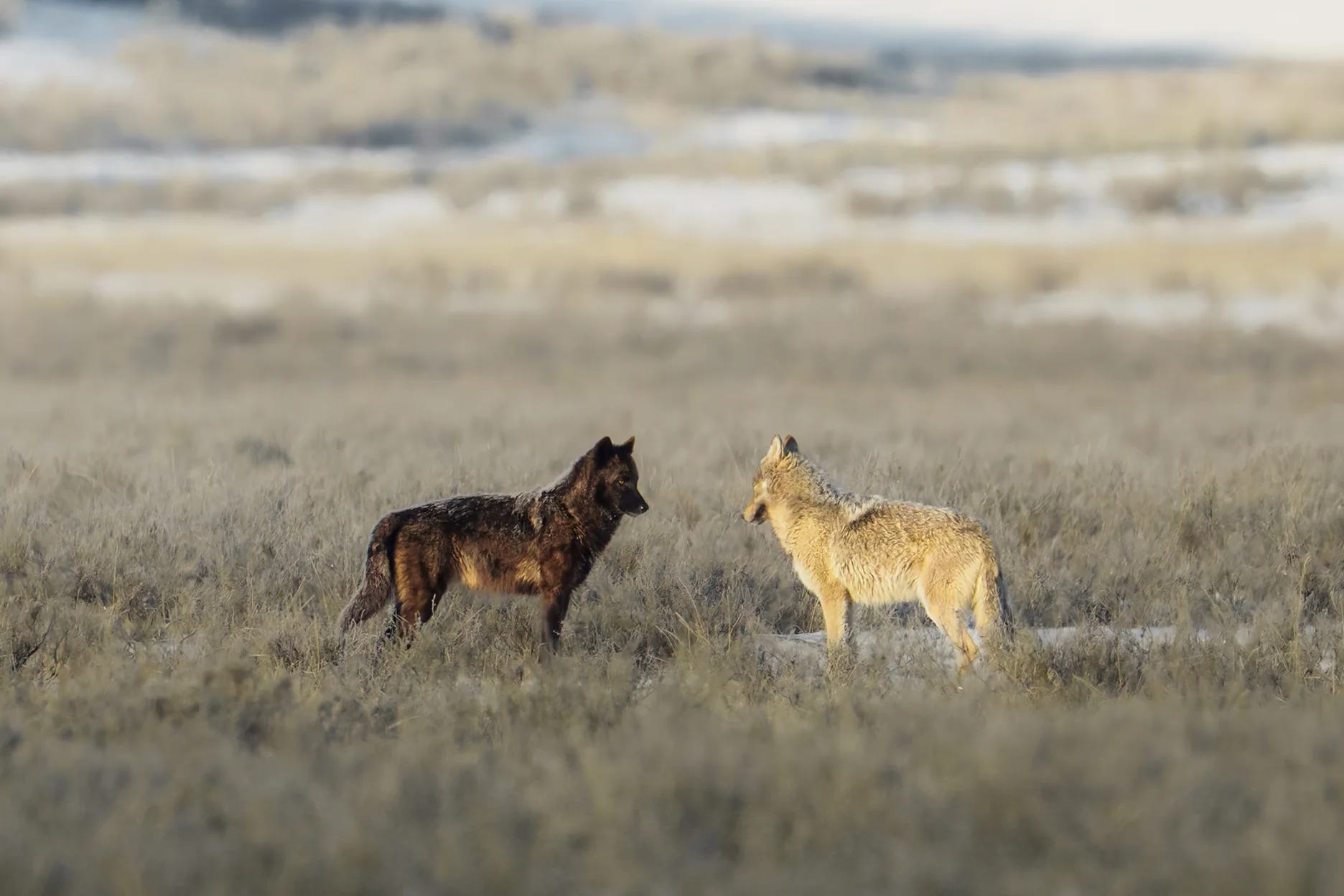
For most of the twentieth century Yellowstone National Park had no wolves. They had been hunted and trapped out by the mid-1920s. As a result, the elk, with nothing left to hunt them, grew numerous and calm. They no longer had reason to move. They stood along the rivers and in the open valleys and ate at their leisure, year upon year.
The willow and aspen and cottonwood on the banks were browsed faster than they could grow, so the young trees never became old ones. Songbirds that nested in them thinned. Beaver, who need the willow through the winter, found less of it and dwindled, and with the beaver went the dams, and with the dams went the slow pooled water, and the streams ran faster and cut deeper and tore at banks no longer held by roots.
In 1995 they brought the wolves back, and the valley began to reassemble. The elk changed their behavior, because a hunted animal cannot afford to stand in the open eating. They moved. They left the exposed banks. And in the ground they vacated the willow and aspen rose, and where the willow rose the beaver returned, and where the beaver built the water slowed and spread, and the banks, root-bound again, stopped washing away.
Christianity won, and on the ground it cleared it raised the richest civilization in history, and, rarer than the wealth, a civilization built to judge and correct itself, one that carried inside it a standard higher than its own conduct and could therefore be found wanting by its own lights. Everything the modern person means by a good society came out of that: the worth of the individual, the abolition of slavery, the rights later extended to women, the university, the hospital, the tension and wrestling that produced the sciences and the wealth, and beneath all of it a morality that was secularized and globalized.
This was the standing forest, the willow and the aspen. And it grew, as such things always grow, under pressure. The faith that raised the cathedral was a faith that had been hunted, by persecution, by internal conflicts, by rival empires, by every worldly ideology that rose to unseat it.
Then the wolves were shot. Victory is a strange poison. A creed that has beaten everything that once threatened it no longer has anything to sharpen itself against, and a people that has grown safe and comfortable and rich past any previous imagining slowly loses the ability to see why the thing that made them so should cost them anything at all. Eventually what remained was the prosperity without the conviction that produced it, the fruit still on the branch, the root already cut.
That emptiness is a vacancy at the center of a civilization. When the transcendent was pushed off its throne, the throne did not stay empty; it became a stage, and onto it climbed every rival account of how life should be lived that the old conviction had once kept out. The West, having disarmed itself of the belief that built it, met these arrivals with nothing to say, no standard left to judge them by, no shared thing left to defend, only the reflex of a tolerance that had long since curdled into indifference. It could not tell the difference between welcoming a guest and surrendering a house.
The American church has organized itself as a business rather than a belief. It competes for attention the way a business competes, for foot traffic, for a customer who can walk out the moment the show goes flat. The sermon is built to retain rather than to convict. The music is engineered for the lift of a concert. There is a coffee bar and a parking plan and a brand, and the doctrine underneath all of it has been sanded down to whatever costs the attender nothing, an affirmation, a mood, a religion that flatters and never once tells a man he is wrong. This is the faith of a population that has not been made to answer for anything in a long time, comfortable and large in number and slowly consuming the ground it depends on without noticing.
A church in that state does not get argued back into seriousness. It gets forced back into it, and the only thing that forces it is cost. And an Islam advancing into the West may be exactly what supplies that cost.
A church that has lost the ability to say a thing is true and its opposite false is about to share a country with an ideology that has never once lost that ability, and the mere fact of its presence forces a question the American church has spent two generations building an entire industry to avoid: does it actually believe what it says, or has it just been performing belief for people who would rather feel something than decide something.
As the bloc of Muslim officials elected with the support of the progressive coalition grows, persecution will inevitably return, and that may, after all, be a good thing.
The elk did not leave the riverbank because someone reasoned with them; they left because staying had become a cost they could no longer pay, and only then did the roots take hold of the banks again, and only then did the water slow enough to carry the valley’s life instead of tearing it out at the source.
The Islamo-Left coalition now moving against the West that the Church built imposes exactly that kind of cost.
When the Church finally rises, the valley will not remain a ruin. The rivers of this country, choked for two generations by indifference, can run with truth again. History has seen this happen before, whenever something arrived that made the alternative unaffordable. And something has now arrived.


I think you’re right. In the Old Testament when a king went astray God brought war. This happened clearly with King David. I hope that in America it is not too late, not just to counter Islam, but also the young people captured by socialism, and other violent ideologies. In Europe it may be too late. But God will be glorified by believers that don’t give up whether we win or not, if we demonstrate our faith in Jesus by our actions.
Interesting comparison and your point is understood. My faith in the God of the Bible is solid. My faith in American Christians understanding the threat and coalescing effectively in time to confront the threat is less than solid.